
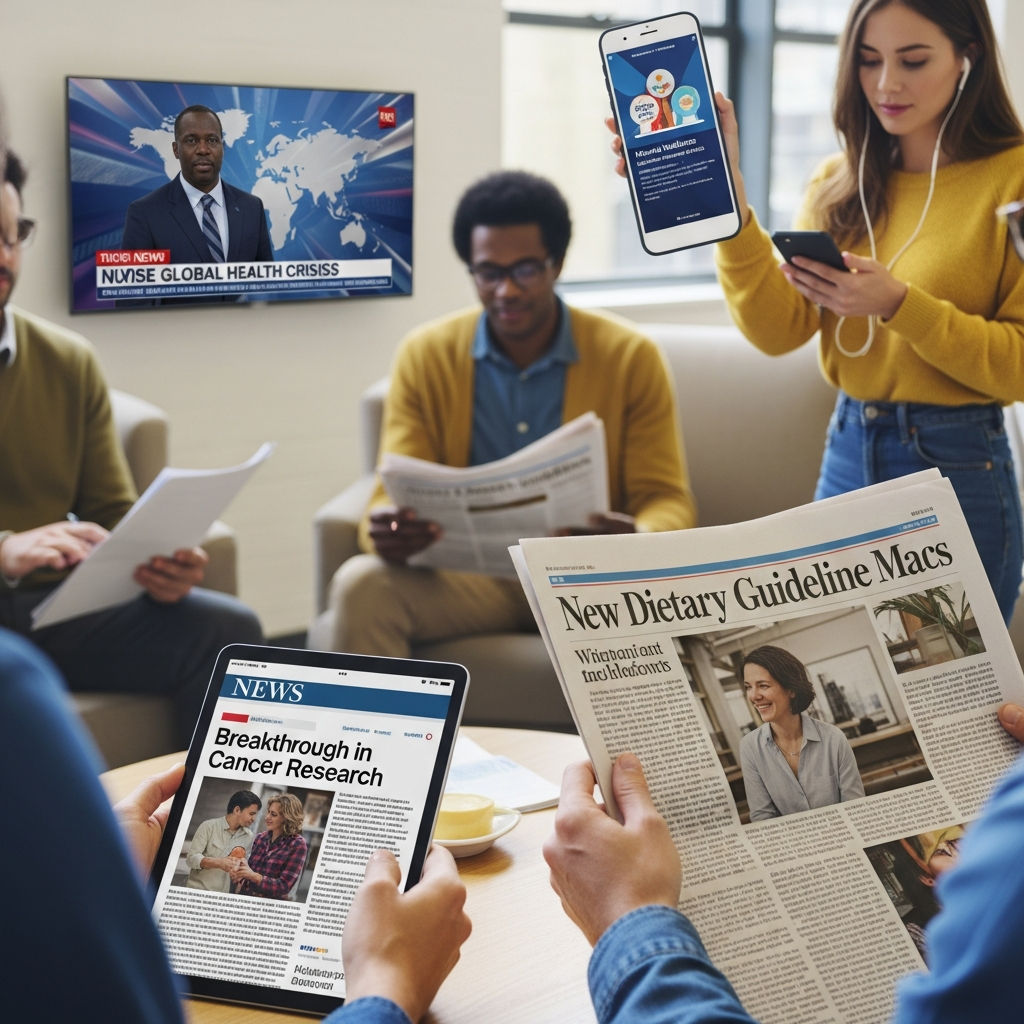
Is Health News Still Relevant? 12 Facts About the Evolution of Medical Journalism
In an age dominated by 15-second TikTok “wellness hacks” and Instagram influencers promoting unverified supplements, the traditional landscape of health news is facing a crisis of identity. Many consumers find themselves wondering: Is health news still relevant? With information available at the touch of a screen, the role of professional medical journalism has shifted from being the sole provider of information to becoming the essential filter for accuracy.
Despite the noise of social media, health news remains a cornerstone of public safety and personal well-being. However, the way we define “relevance” has changed. It is no longer just about reporting that a study exists; it is about contextualizing that study within the broader framework of human biology, economics, and ethics. Here are 12 facts that prove health news is not only relevant but more critical today than ever before.
1. Health News Acts as a Buffer Against Misinformation
The rise of “infodemics”—where a surplus of information, both accurate and inaccurate, spreads during a health crisis—has made professional reporting vital. While social media algorithms often prioritize engagement over accuracy, reputable health news outlets prioritize fact-checking and peer-reviewed evidence. This serves as a necessary check against viral myths that can lead to dangerous health choices.
2. It Bridges the Gap Between Labs and Living Rooms
Scientific papers are written for scientists, often filled with dense jargon and complex statistics. Health news translates this high-level data into actionable insights for the general public. Without journalists to interpret the “P-values” and “confidence intervals,” the average person would struggle to understand how a new breakthrough in CRISPR technology or immunotherapy actually affects their life.
3. Reporting Drives Public Health Policy Changes
Investigative health journalism has a long history of sparking legislative change. When news outlets report on the rising costs of insulin or the lack of mental health resources in rural areas, it puts pressure on policymakers. Relevance is found in the ability of the news to hold institutions accountable, ensuring that healthcare remains a priority in the halls of government.
4. It Provides Context for the “Latest Study” Syndrome
We have all seen the headlines: “Coffee Cures Cancer” followed a week later by “Coffee Increases Heart Disease Risk.” Health news is relevant because it provides the nuance these headlines lack. Expert health writers look at sample sizes, control groups, and funding sources to tell readers whether a study is a groundbreaking discovery or merely an interesting observation that requires more research.
5. Mental Health Coverage Has Reduced Social Stigma
One of the greatest successes of modern health news is the normalization of mental health. Consistent, empathetic reporting on anxiety, depression, and neurodivergence has moved these topics from the shadows into the mainstream. This relevance is measured in the millions of people who feel empowered to seek help because they saw their struggles reflected in a reputable news feature.
6. It Tracks Global Health Security
As the world learned during the COVID-19 pandemic, a health threat anywhere is a health threat everywhere. Health news serves as a global surveillance system, tracking outbreaks of Ebola, avian flu, or new COVID variants. This “early warning system” is essential for international travel, trade, and personal safety, making it indispensable in our interconnected world.
7. Health News Empowers Patient Advocacy
The “informed patient” is a byproduct of high-quality health journalism. When individuals read about new treatment options for chronic illnesses like multiple sclerosis or Crohn’s disease, they can bring that information to their doctors. This shifts the dynamic from a passive recipient of care to an active participant in a shared decision-making process.
8. It Unmasks the “Wellness” Industrial Complex
The wellness industry is worth trillions of dollars, often peddling products with little to no scientific backing. Health news plays a “watchdog” role, debunking “detox teas,” “crystal healing,” and “vampire facials.” By applying scientific rigor to lifestyle trends, health journalism saves consumers money and prevents them from delaying necessary medical treatments in favor of alternative fads.
9. Coverage of Health Inequities Highlights Systemic Issues
Health news is increasingly focused on the social determinants of health—how race, zip code, and income affect longevity. Relevant health journalism doesn’t just talk about biology; it talks about the environment. Reporting on “food deserts” or the higher maternal mortality rates among Black women brings attention to the systemic changes needed to achieve true health equity.
10. It Explains the Intersection of Technology and Biology
With the explosion of AI in healthcare, wearable tech, and tele-health, the landscape of medicine is changing at a dizzying pace. Health news is the primary vehicle for explaining how these technologies work. Whether it’s an Apple Watch detecting an irregular heartbeat or an AI algorithm diagnosing skin cancer, news outlets provide the necessary critique of tech efficacy and data privacy.
11. Nutritional Science Reporting Clarifies Diet Culture
Dietary advice is perhaps the most confusing sector of health information. Health news remains relevant by sifting through the noise of Keto, Paleo, and Intermittent Fasting. By interviewing dietitians and reviewing long-term epidemiological studies, health journalists provide a balanced view of nutrition that emphasizes sustainability over “quick fixes.”
12. It Prepares Us for an Aging Population
As the “Silver Tsunami” approaches, health news focuses on the challenges of aging, from Alzheimer’s research to the logistics of long-term care. This relevance is deeply personal for the millions of “sandwich generation” adults who are caring for both children and aging parents. Health news provides the roadmap for navigating the complexities of geriatric care and end-of-life decisions.
The Future of Consuming Health News
While the relevance of health news is undeniable, the *way* we consume it must evolve. To stay informed without becoming overwhelmed or misled, consumers should look for specific hallmarks of quality journalism:
- Sourcing: Does the article link to a peer-reviewed study or quote a credentialed expert?
- Objectivity: Does the piece acknowledge the limitations of a study or the potential side effects of a treatment?
- Conflict of Interest: Is the news outlet transparent about who funded the research being reported?
- Timelessness vs. Trendiness: Does the article offer long-term health value or is it chasing a viral moment?
Conclusion: Why We Can’t Ignore the Headlines
In conclusion, health news is not just relevant; it is a vital utility for modern living. While it must compete with the “fast food” equivalent of information on social media, the “slow food” of investigative and evidence-based medical journalism provides the nourishment we need to make informed decisions. By tracking policy, debunking myths, and explaining the latest scientific breakthroughs, health news ensures that we don’t just live longer, but that we live better and more informed lives.
As we move further into a digital-first era, the challenge will be for readers to support and seek out high-quality health journalism. In a world where your health is your greatest wealth, the news that helps you protect it remains the most valuable commodity of all.